


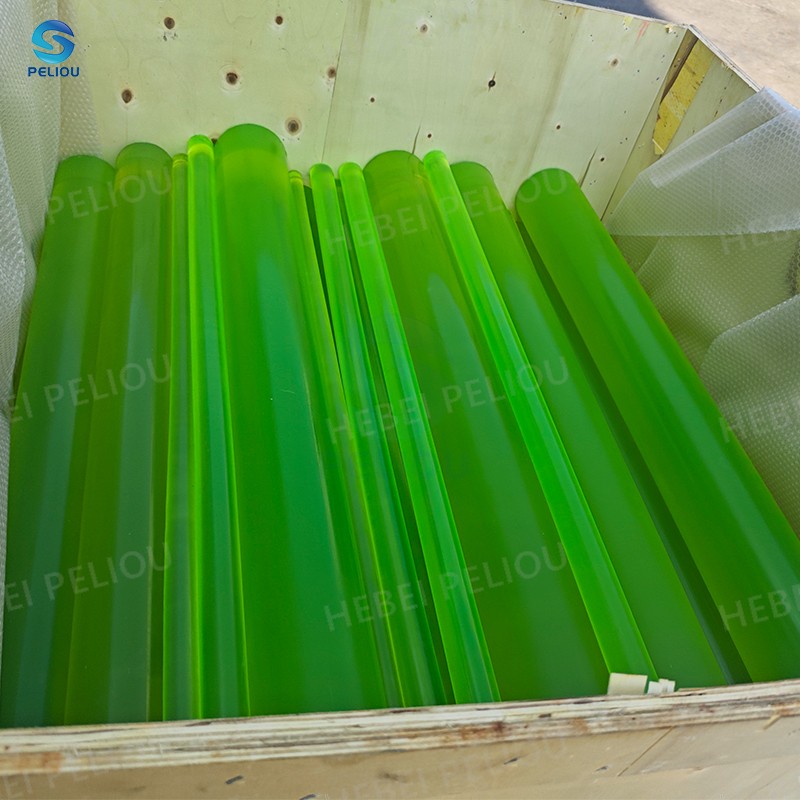
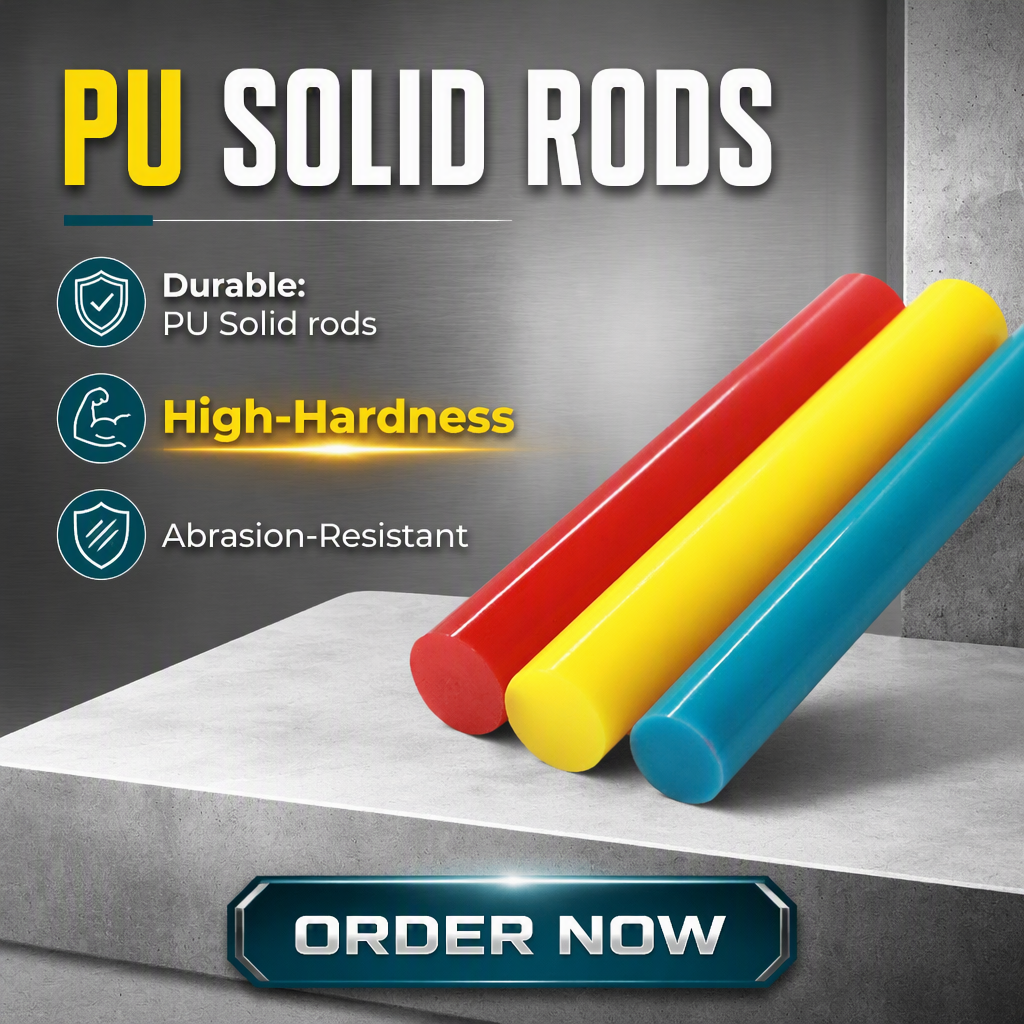
Polyurethane Rod, commonly known as PU Rod, Casting Polyurethane, or by trade names such as Urethane Rod and Spring Rubber, is a thermosetting polyurethane elastomer synthesized through the reaction of polyol and isocyanate via chain extension and crosslinking. This unique material occupies a distinctive position in the engineering materials spectrum—combining the elasticity of rubber with the strength and durability of engineering plastics, it delivers performance characteristics that neither traditional rubber nor conventional plastics can achieve alone.
Material Classification: Polyether vs. Polyester
PU rods are classified into two primary types based on the main chain structure of the polyurethane elastomer:
Polyether-type PU Rod (Polyether urethane) offers superior resilience, moisture vapor transmission, low-temperature performance, impact strength, heat buildup resistance, water resistance, and fungal resistance. Its lower viscosity also facilitates easier processing.
Polyester-type PU Rod (Polyester polyurethane) excels in mechanical strength, tensile strength, tear strength, sliding friction characteristics, oil resistance, thermal aging resistance, metal adhesion, solvent resistance, and oxidation resistance. However, its higher viscosity makes processing more challenging.
The choice between polyether and polyester types depends on the specific application requirements—whether environmental factors like moisture and temperature or mechanical demands like strength and wear resistance take priority
Applications Across Industries
Thanks to their versatility, PU rods find application in a wide spectrum of industries and use cases:
Automotive Industry: Used in suspension systems as coil spring buffers to reduce body vibration and noise, improve handling stability, and shorten braking distances.
Industrial Machinery: Ideal for cushioning pads, mold springs, and impact-absorbing components in metal stamping, heavy presses, and general mechanical equipment.
Mining & Metallurgy: Employed as wear-resistant pads, backing plates, and buffer blocks in heavy-duty equipment and material handling systems.
Precision Engineering: Machined into bushings, rollers, spacers, isolation mounts, and wear strips for high-performance assemblies.
Research & Development: Used in studies on viscoelastic energy dissipation, fatigue resistance in elastomeric systems, and polymer blend optimization.


